
.webp)
In the past 12 months, the EBU has advanced its artificial intelligence priorities and redoubled its commitment to the responsible and effective use of AI by public service media.
In Spring 2024, we released a strategic paper emphasizing the importance of cooperation among PSM and AI stakeholders to address the challenges and opportunities of Generative AI; and published Trusted Journalism in the Age of Generative AI, reporting insights from 40 international media leaders and academics about AI’s implications for journalism.
In collaboration with the International Broadcasting Convention, we created the IBC AI Tech Zone in September to showcase AI applications in media. We launched an AI Casebook, a body of creative use cases where AI has enhanced media creation and distribution, and a new collaborative platform — EBU AI Sandbox — to facilitate the development and evaluation of customized, open-source based AI solutions.
In October, the EBU Academy Workshop drilled into AI and its transformative impact on learning — just one of more than 40 activities organized by the new EBU Academy School of AI in its first 12 months.
The culmination of the EBU’s AI year came in December at our second AI Summit, attracting numerous big-name speakers, such as celebrated author Yuval Noah Harari and more than 450 attendees.
The pace has been sustained in 2025 with an emphasis on how to integrate AI across our organizations from sport to music, sustainability, formats etc. The EBU’s Action on AI priorities sets out how we are going to support Members with a sharper focus on AI and Big Tech and fostering common approaches.
In light of this, we have coordinated the European rollout of a BBC study into how AI assistants are distorting the answers to news queries with 24 Members agreeing to replicate the study in their own territories. As well as leading a visit for C-level members to meet with Big Tech across the USA in April, we published our second report on AI in news, ‘Leading Newsrooms in the Age of Generative AI’.
Finally, we have rolled out an internal AI policy and EBU-GPT tool in parallel with a training programme for all our staff.
These initiatives reflect our proactive approach to embracing AI, ensuring that PSM organizations are well-equipped to navigate the evolving media landscape responsibly and effectively.
As part of our drive to help Members innovate, we have focused on creating scalable solutions that deliver real value — either by offering faster, more affordable paths to advanced services like AI, or by unlocking unique shared resources like enriched news content from across our community.
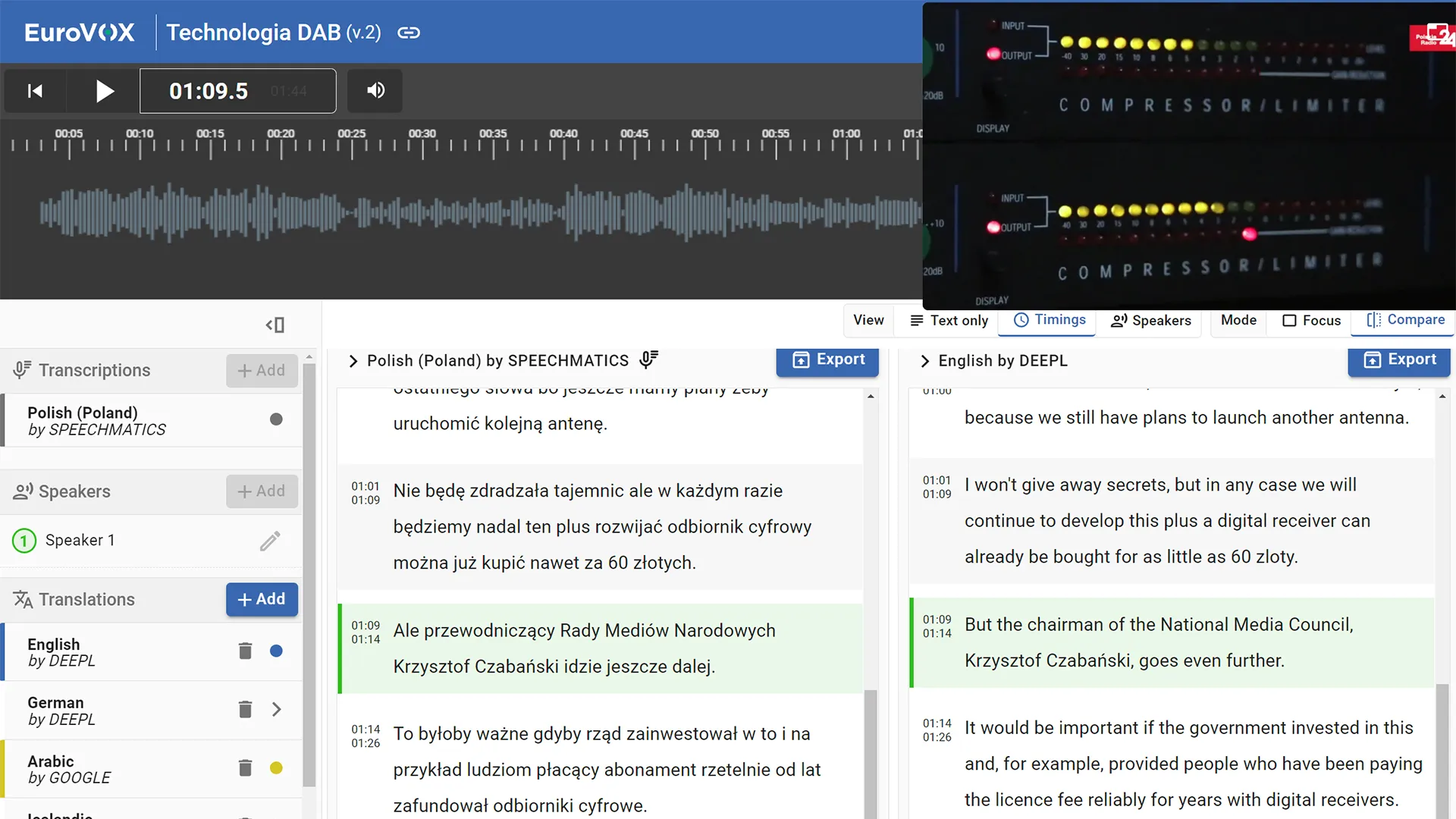
A highlight from this year was the launch of Neo — a smart, AI-powered news chatbot developed in collaboration with our Members. Neo is already live in the Swedish Radio mobile app and website and continues to evolve. It makes it easy for Members to roll out their own AI-driven tools as it builds on the same systems that underpin the Digital News Hub, drawing on the capabilities provided by other EBU innovations such as the EuroVOX language toolkit and the PEACH data-science platform.
AI and data tools continue to energize our expert groups but work on other relevant media technologies has continued unabated with 2,500 engineers connecting through our communities. Alongside this, our tech industry conferences have helped connect Members with key vendors and drive forward innovation.
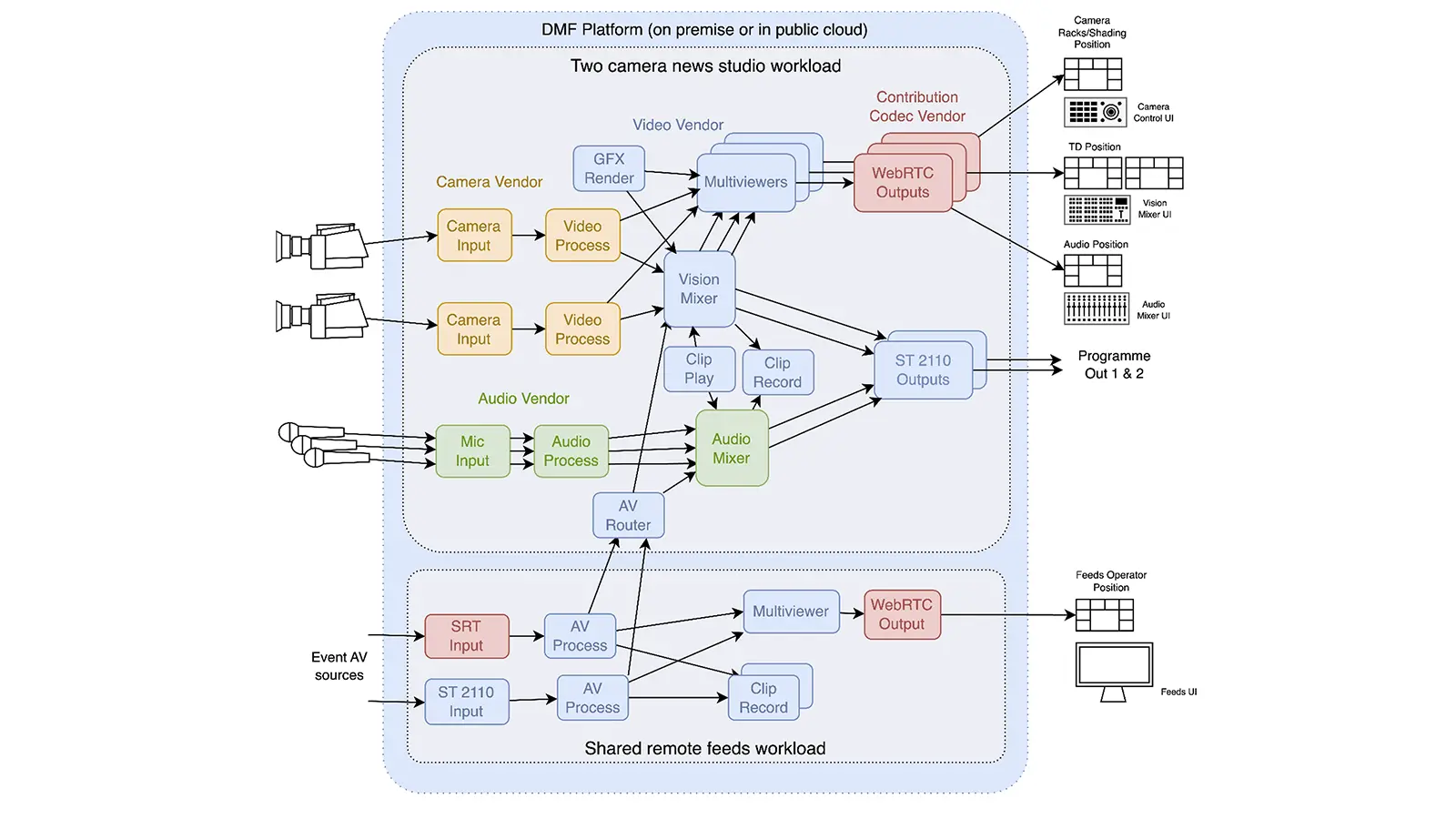
One standout area this year was our Dynamic Media Facilities (DMF) concept, which drew strong interest from industry leaders and was downloaded 2,000 times. DMF offers a fully software-based, interoperable production infrastructure, allowing Members to scale flexibly between on-premise and cloud. A flagship DMF facility is now in the works at CBC/Radio-Canada, and we have kicked off a collaboration with the Linux Foundation to develop the Media eXchange Layer as the foundation for the technology.
We have also gathered hands-on insights into a wide range of large language models, including open-source and emerging options being explored by public service media.
On the hardware front, we have released benchmark tests for reference HDR monitors, surveyed Members on wireless production needs, and tackled inconsistencies in Audio Description dip levels, improving the experience for audiences.
And we continue to strengthen ties with PSM R&D centres and Innovation Hubs across Europe and Asia — helping shape shared positions on future EU R&D funding programmes.

As Members operate across more complex distribution landscapes, we have focused on tackling shared challenges — addressing cost pressures, countering market imbalances and maintaining prominence.
In the streaming and on-demand field, we updated our Recommendation on procuring interoperable Content Distribution Networks, helping Members avoid vendor lock-in and maintain flexibility.
We stepped up efforts to protect prominence on platforms — working with car manufacturers and TV set vendors and a range of service and platform providers to keep Member content front and centre. Our Connected Cars and Devices group is working with industry to implement ‘deep-linking’, which provides a bridge between live broadcast and a richer set of on-demand content from Members own applications on vehicle dashboards. Similar work with Smart TV vendors, along with prototype solutions, aims to improve prominence without the steep costs often demanded by major TV manufacturers.
Finally, we continued building more resilient and efficient media distribution infrastructures, particularly important for times of crisis. The ESA-backed 5G-EMERGE project moved into Phase 2, now involving 33 partners to converge satellite, broadcast, and broadband. We also continue to support and monitor the testing of 5G-based broadcast technology.

With cybersecurity having become a major focus last year, we further stepped up our efforts to help Members improve production system security and build trust in the digital media landscape.
We updated EBU Recommendation 143, which is widely used across the industry by media and vendors as a reference establishing security standards in media systems, software and services. And, to help the media industry better protect its sensitive data and content in the age of AI, we released EBU Recommendation 168, providing guidance for information classification.
With disinformation and deepfakes on the rise, we advanced work on content provenance tracing — a critical tool for restoring trust. Our collaboration on implementation of the C2PA standard took a major leap forward, focusing on closing the gaps in common media workflows, and culminating in a demo of the industry’s first end-to-end C2PA implementation at IBC. This technology lets end-users see where content comes from and how it has been edited, with tamper-proof transparency.
To reinforce security in media production, we also founded Security4Media, a dedicated association for testing, certifying, and governing security measures. It now includes 10 Members and is expanding its role to support C2PA-related governance and administration.
We are committed to helping Members identify and implement the fundamental changes needed for sustainable growth and long-term resilience. Our tailored transformation services — ranging from peer reviews and agile consultancy to strategy sprints — continue to evolve to meet Members’ changing needs with personalised, hands-on support.
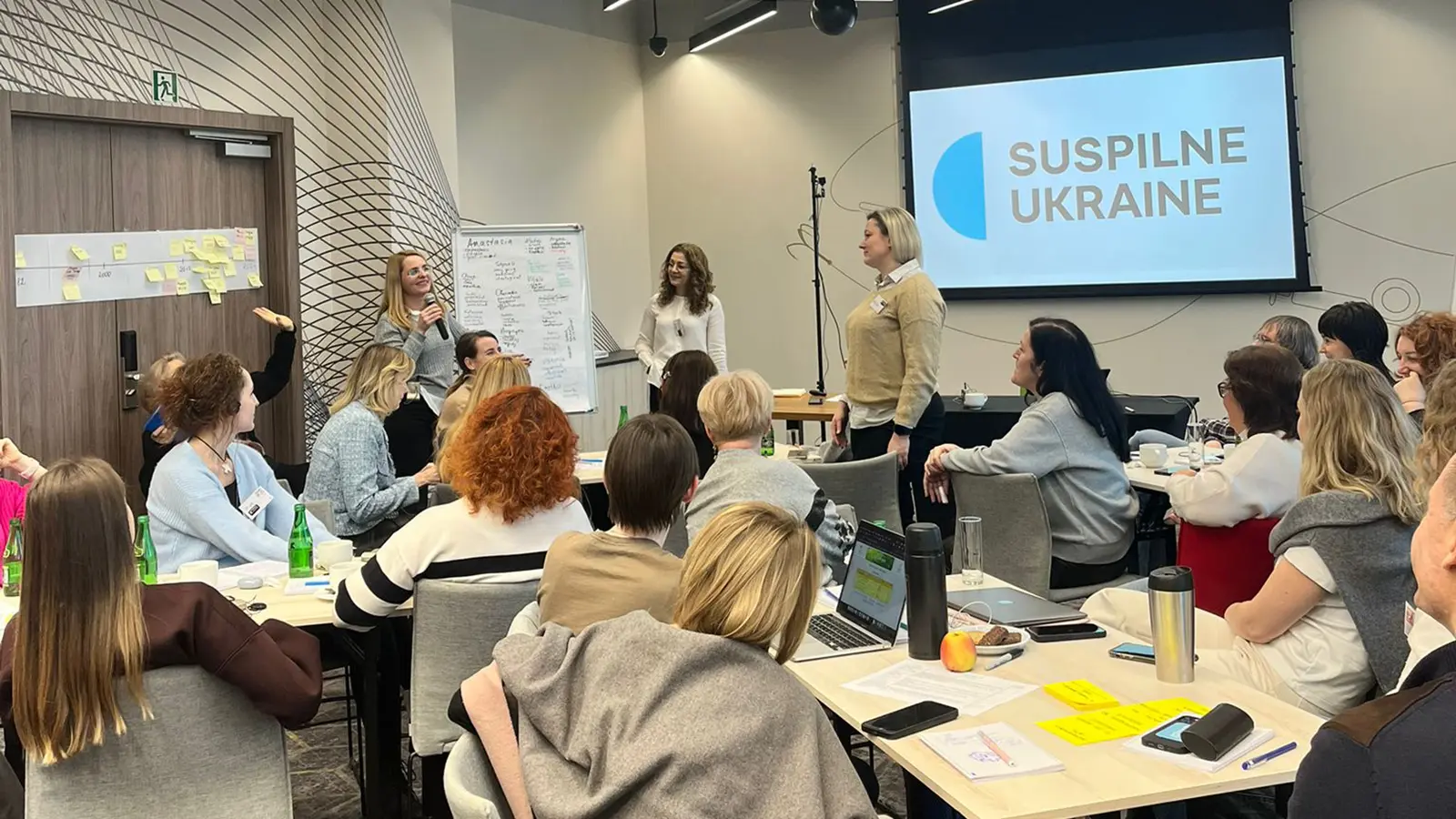
Over the past year, we have collaborated on several impactful projects. With Suspilne Ukraine, we co-developed a Diversity, Equity, and Inclusion policy through expert input, peer collaboration, and a tailored workshop for staff.
We’re supporting RTP’s ambitious House of News transformation with strategic consultancy and peer exchange — helping modernize newsroom infrastructure and foster cross-platform collaboration.
With RTVSlo, we are working on the integration of TV, radio, and digital newsrooms. We are also supporting the team in drafting their proposal for Supervisory Board approval and driving cultural change through ‘Changing Mindset’ sessions and coaching.
We also supported Latvian Public Service Media in co-developing a Digital First strategy, following the merger of Latvian Television and Latvian Radio. Our work included an organizational review, executive workshop, and knowledge exchange with PSM peers.
Our expert community continued to focus on key sustainability challenges, from measuring the environmental impact of AI and cloud services to understanding Scope 3 emissions — those occurring beyond an organization’s direct operations — and the challenges of corporate sustainability reporting (CSRD).
Together with our Media Intelligence Service, we mapped out current sustainability practices across European public service media. We also published survey results on how Members are tackling Scope 3 emissions, offering a clearer picture of upstream and downstream environmental impacts.
To support smarter decisions around cloud use, we shared a case study on measuring cloud emissions using existing industry tools. And in partnership with our Legal and Policy department, we hosted a dedicated workshop on CSRD, helping Members navigate new reporting requirements.
Our annual Sustainability Summit brought Members and industry leaders together to explore emerging issues — like the energy footprint of production sets and the environmental impact of AI.
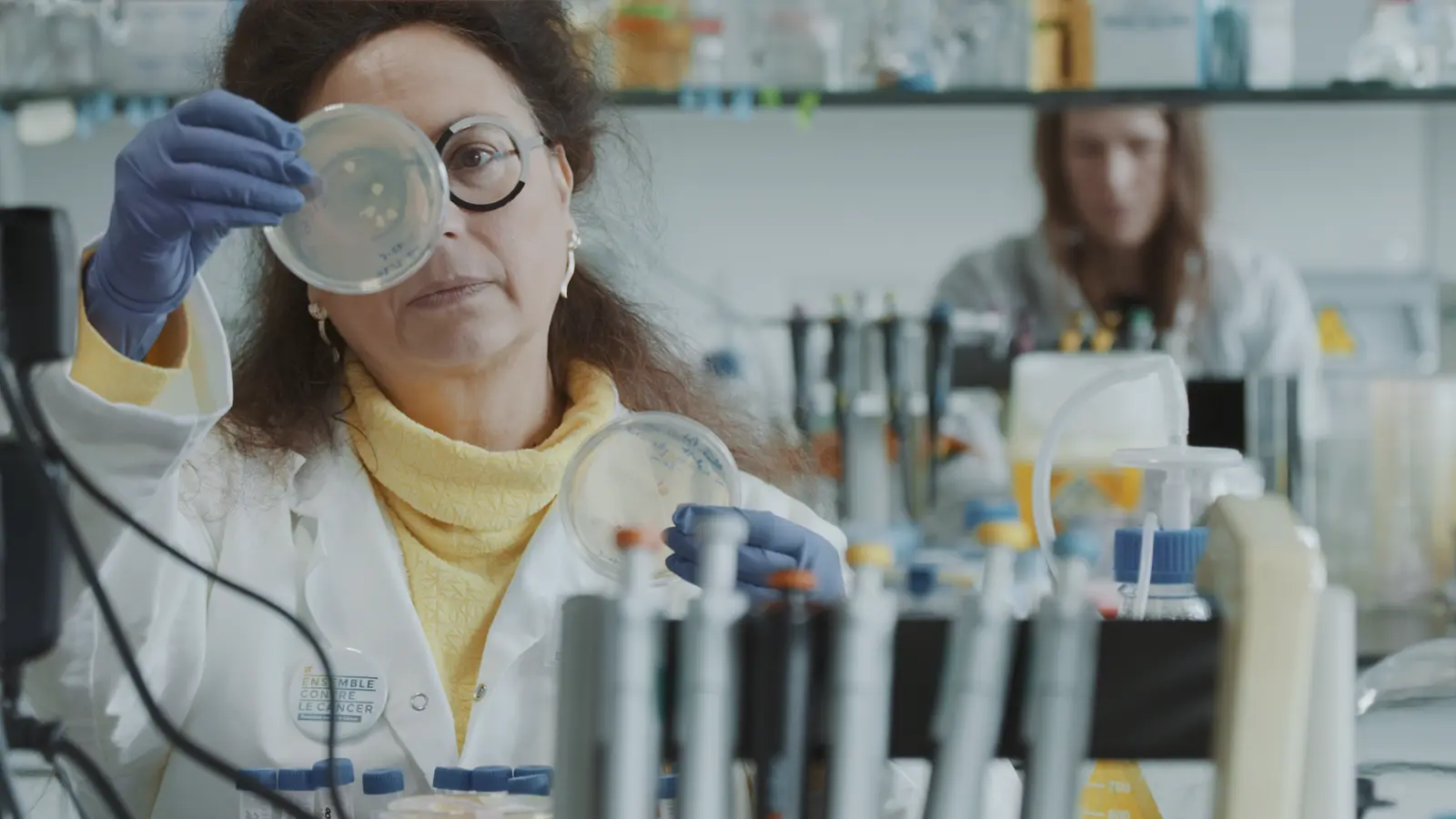
Our work in Diversity, Equity and Inclusion (DEI) helps Members to ensure broad representation in their content and at all levels of their organizations.
We’ve launched a Neurodiversity Toolkit and convened colleagues from 10 Members to create guidelines on making public service media organizations more inclusive workplaces for neurodivergent staff, including recruitment, career progression and the work environment.
Over nine months, we’ve been working with Suspilne Ukraine to run a new kind of project that helps the broadcaster to draft their own DEI policy. With Members, we have also co-hosted a series of successful DEI events and we screened our Women in Science coproduction at different events including a BBC Wistem in December and the UNESCO International Women in STEM Day.
Our DEI Steering Group, with active input from a range of groups, meets quarterly to keep us on track.

Sharing best practices for engaging young audiences remains our focus, ensuring the relevance and sustainability of public service media in today’s rapidly evolving digital landscape.
In 2024, we refreshed our Heads of Kids Group meetings to include topics like collaborating with schools, event strategies, and gaming strategies. The Youth Experts Group met at Yle and RTP to learn and discuss best practices and strategies to reach teenagers and young adults. Additionally, the Kids News Group met in Copenhagen to discuss the best way to create news content for kids.
We collaborated with the Eurovision Song Contest on a new Roblox gaming world, designed to engage young audiences with the world’s biggest music show.
And the fifth #SayHi campaign, promoting friendship and inclusion, involved five EBU Members. We also supported various co-productions including documentaries, animation projects, and dramas.
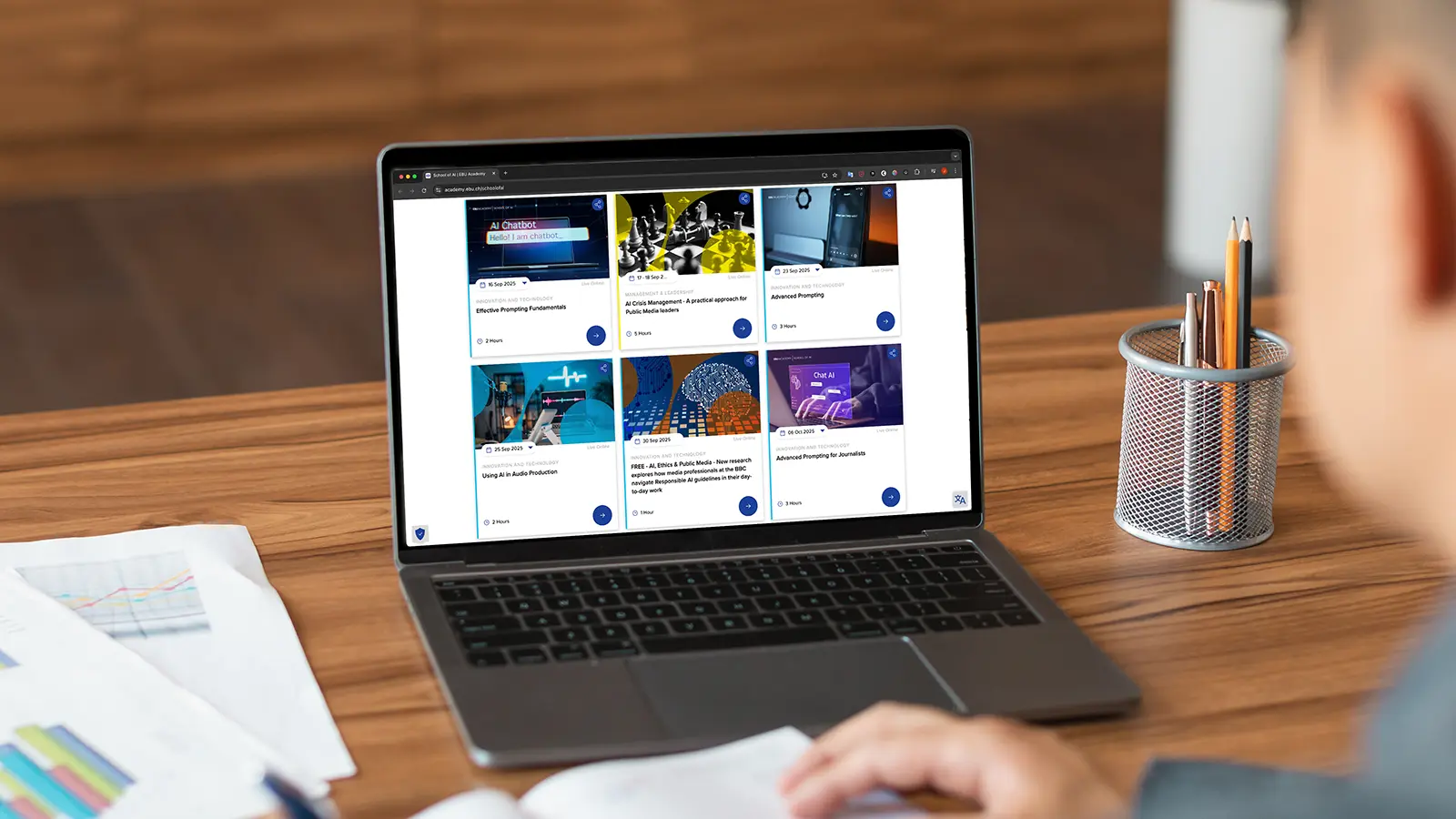
The EBU Academy School of AI celebrated its first birthday in March.
In its opening year, its artificial intelligence related trainings and learning activities have been attended by 900 participants from almost 70 member organizations. The School of AI is also receiving a growing number of requests from Members for bespoke learning.
The EBU Academy’s new Future Leaders Programme debuted in April 2025, with more than 20 managers attending classes at Aalto University in Helsinki. Each participant has been assigned a personal mentor from the alumni of our Executive Programme which itself marked its 10th anniversary in 2024.
As a reflection of global tensions, EBU Academy’s Hostile Environment Safety Training, or HEST, has been experiencing high demand with 5 planned courses in 2025 and several trainings delivered on site for EBU Members.
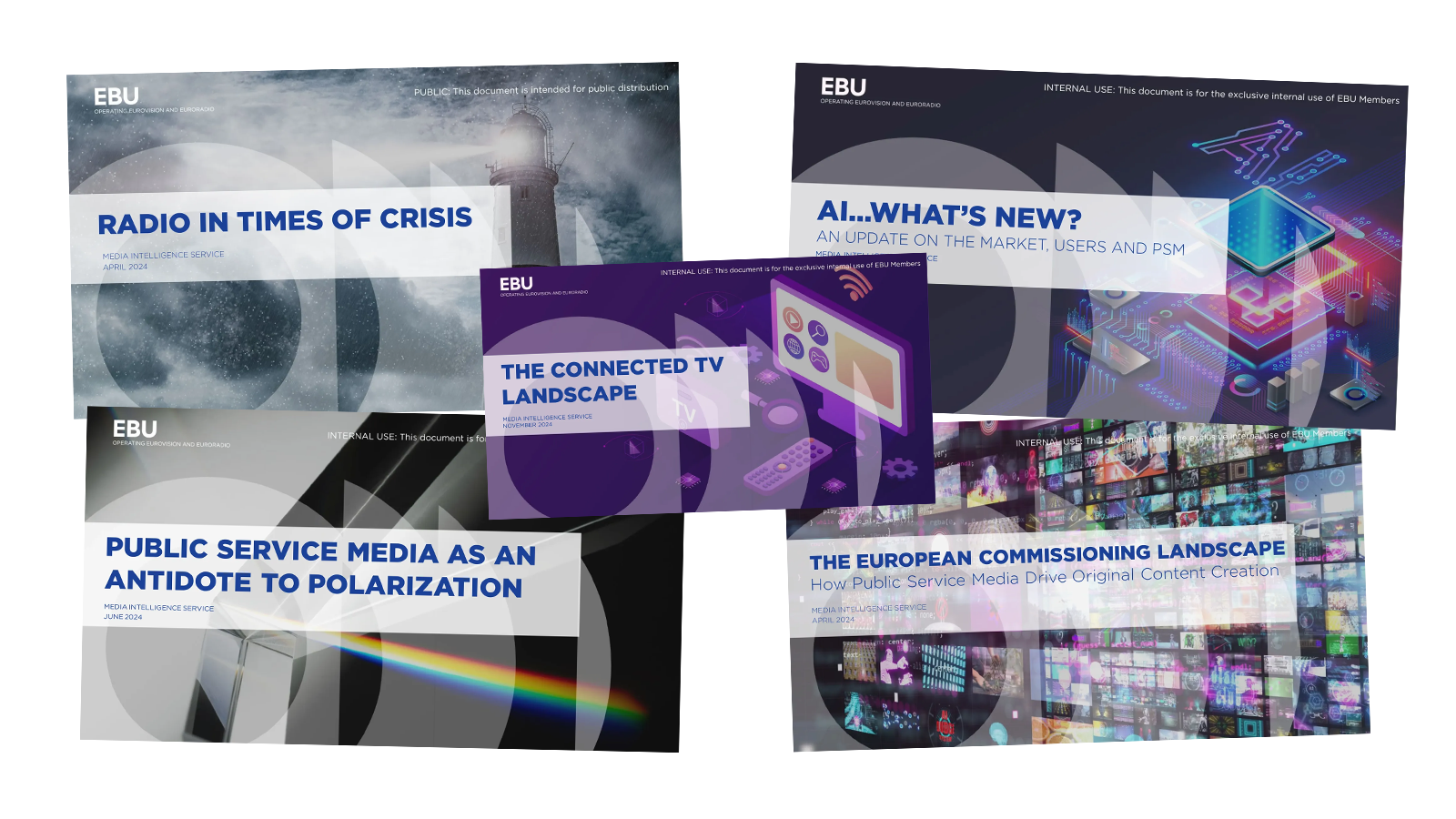
Our team of research experts supports the strategy and success of our Members with research and insights to help navigate complex landscapes and make the case for the value of public service media.
Last year, the Media Intelligence Service (MIS) produced more than 150 different resources – most available in 20 languages – that were downloaded nearly 18,000 times.
From AI, funding and competition to trust, sustainability and audience attitudes, MIS covered the issues that matter for PSM and the greater good of society with reliable information and trusted analysis built on unique data sets from our network.
Highlights included AI… What’s New?, Public Service Media as an Antidote to Polarization, The Connected TV Landscape, European Commissioning Landscape and Radio in Times of Crisis.
Throughout the year, we kept our focus on Members by responding to more than 250 individual requests for bespoke analysis and solutions.


